


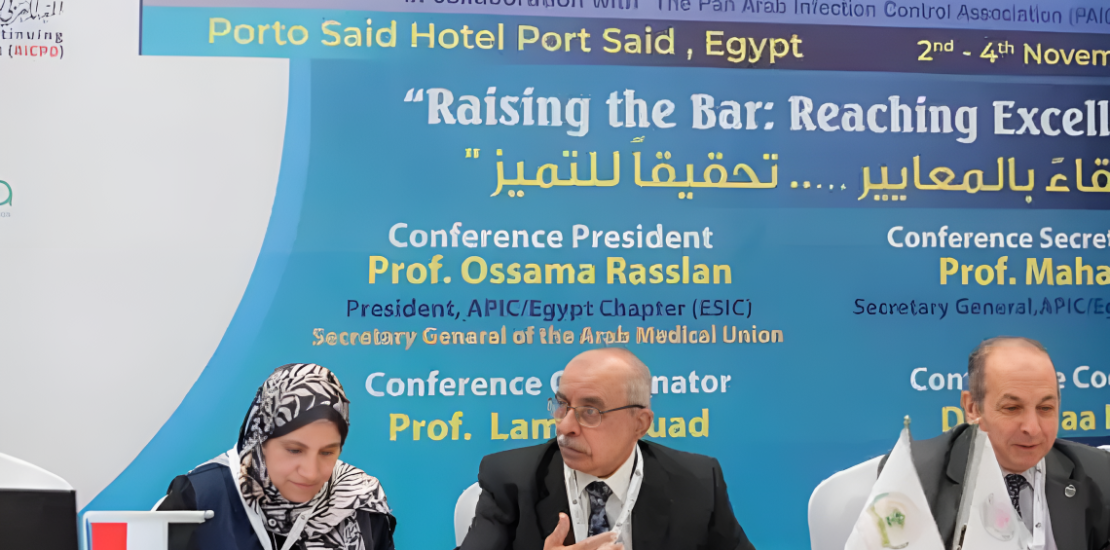
The 31st Annual Conference of the Egyptian Society for Infection Control announced the establishment of the first professional diploma specializing in biological risk management in cooperation with the Arab Institute for Professional and Sustainable Development “Certified” and the Arab Association for Infection Control.
At the conclusion of its activities, the conference also recommended the need to build the necessary capabilities to secure the information network to monitor infection, build simulation models and predict the occurrence of epidemics in order to keep pace with global developments.
This came during the final statement of the conference activities, which was held over three days from November 2 to 4 in Port Said, headed by Professor Dr. Osama Raslan, Secretary General of the Arab Doctors Union.
The conference activities included 6 scientific sessions and two workshops.
The conference’s recommendations included that integrated programs for infection prevention and control be one of the basic pillars of applying clinical governance in health facilities to ensure the achievement of safe health care and comprehensive health coverage, and to support the policy of an integrated, harmonious, multi-functional team consisting of the medical microbiology laboratory, infection prevention and control, and clinical pharmacy in order to ensure Implementing programs for the rational use of antimicrobials.
The conference called for the efficiency of medical microbiology laboratories and implementing a rational diagnosis policy with the aim of ensuring the provision of raising effective and rapid treatment for infections within health facilities and preventing the occurrence of complications.
He also recommended the necessity of specialized education and training in the field of biological risk management, with the aim of providing qualified scientific personnel, which is the first building block for building an integrated national program for biosafety.
The recommendations also included the adoption of unified definitions for hospital infections at the national level with the aim of implementing expanded programs to monitor hospital infections and establishing a national database, and the necessity of establishing a qualified rapid response team in every health facility, especially those serving border areas, with the aim of preparing to deal with potential disasters and preventing the occurrence of epidemics.
The conference stressed the need to maximize the use of modern social media applications and various digital programs to achieve rapid data access and good communication between health care providers.
And integration between those responsible for preventing and controlling infection and improving quality to maximize the benefit of all the different tools and models of quality in reducing infection rates.
The final statement pointed to the importance of building national capabilities with regard to using and analyzing expanded information and securing the information network to monitor infection, create simulation models, and predict the occurrence of epidemics in order to keep pace with global developments.
He stressed the need to pay attention to economic studies in health care, especially in light of the economic crises at the local and global levels.