


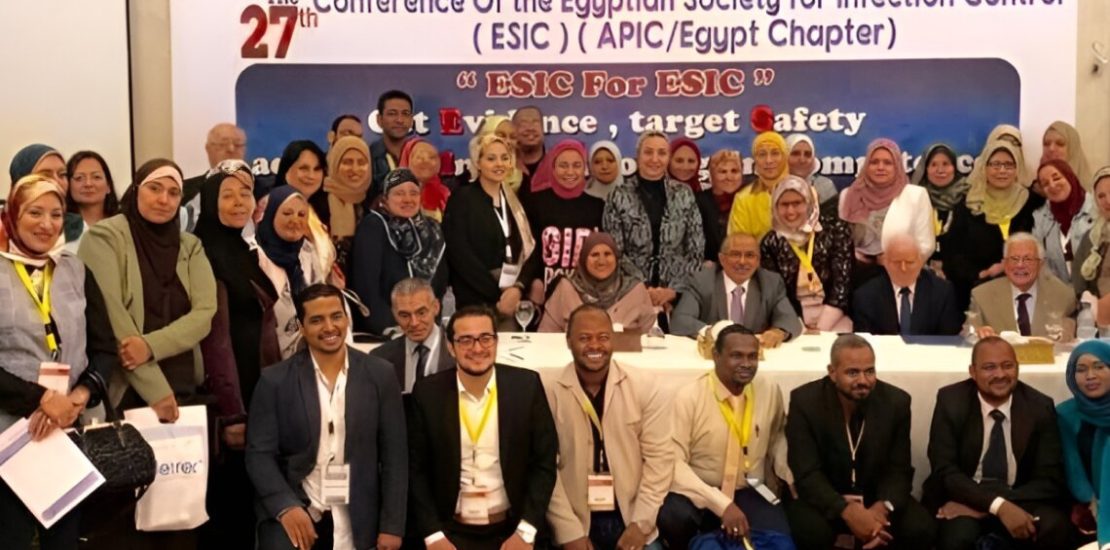
Participants in the activities of the twenty-seventh annual international conference on infection control stressed the need to confront the threat of antibiotic-resistant microbes resulting from the misuse of antibiotics, which has become a nightmare for millions around the world
The day before yesterday, the activities of the twenty-seventh annual international conference on infection control, organized by the Egyptian Society for Infection Control, in cooperation with the Arab Institute for Sustainable Professional Development “Mutamad”, were launched under the title “In Commitment to the Guide… In Implementation of Standards… To Prevent Infection”, under the auspices of The Arab Doctors Union, with the participation of more than 250 expert doctors, faculty members, and specialists in the field of infection control and epidemiology, and representatives of a number of local and international bodies and organizations, most notably the World Health Organization, the Egyptian Ministry of Health, the African Network for Infection Control, and the Egyptian Association for Patient Safety.
In a statement by Dr. Osama Raslan, Chairman of the Conference and Secretary General of the Arab Doctors Union, he explained that the annual conference this year seeks to focus on a problem that is now troubling the world, which is microbial resistance to antibiotics, and how to confront this danger, in light of the prevailing culture about the use of medicine without Medical consultation, and the need to rationalize the use of antibiotics. The conference also discussed the importance of health awareness for health workers and society alike to reduce this crisis, as well as the importance of the role of leadership in combating infection, especially within health institutions, and adopting a culture of safety and prevention.
Dr. Omar Abdel Aziz, representative of the World Health Organization, stressed the importance of the topics presented by the conference this year, adding: “The conference is very important to learn how to confront the threat of antibiotic-resistant microbes, which have become a nightmare for millions around the world. The conference is also considered a scientific platform for cadres.” Young women to learn about developments in the field of infection control, and an opportunity to exchange experiences and training.
Abdulaziz pointed out that the World Health Organization office is communicating with the Egyptian Society for Infection Control and all relevant partners to develop a plan that can be achieved on the ground, and to work together to transfer recommendations to concrete practical steps. This meeting is considered a great opportunity for joint cooperation with the World Health Office in Cairo in many areas. Most notable are scientific research, governance of antibiotic use, infection control systems, training and communication.
Dr. Maha Fathi, the rapporteur of the conference, also stated that one of the most prominent recommendations issued by the conference was spreading community awareness regarding the rights of the HIV patient (AIDS), and considering it a solidarity responsibility between governmental and non-governmental institutions, and the Egyptian Society for Infection Control took the initiative in cooperation with the Arab Institute. For development Sustainable Professionalism “Certified” calls for holding a scientific awareness day, which is scheduled to be held at the end of February, in order to raise community awareness in general, as well as educate workers in the health field, and emphasize the right of health service providers to provide and facilitate procedures for receiving the required follow-up, and receiving preventive doses if exposure occurs. As well as providing rapid tests to facilitate testing of the source of exposure, and making an initial preventive dose available in hospitals to quickly start preventive drug doses.